
Every ride leaves something behind in your helmet. Sweat soaks into the liner, dust settles in the vents, and the visor collects whatever the road throws at it.
None of it looks like much after one ride. After a month the liner smells, the visor smears in the sun, and the vents stop moving air the way they should.
Cleaning it takes about twenty minutes and things you already have at home.
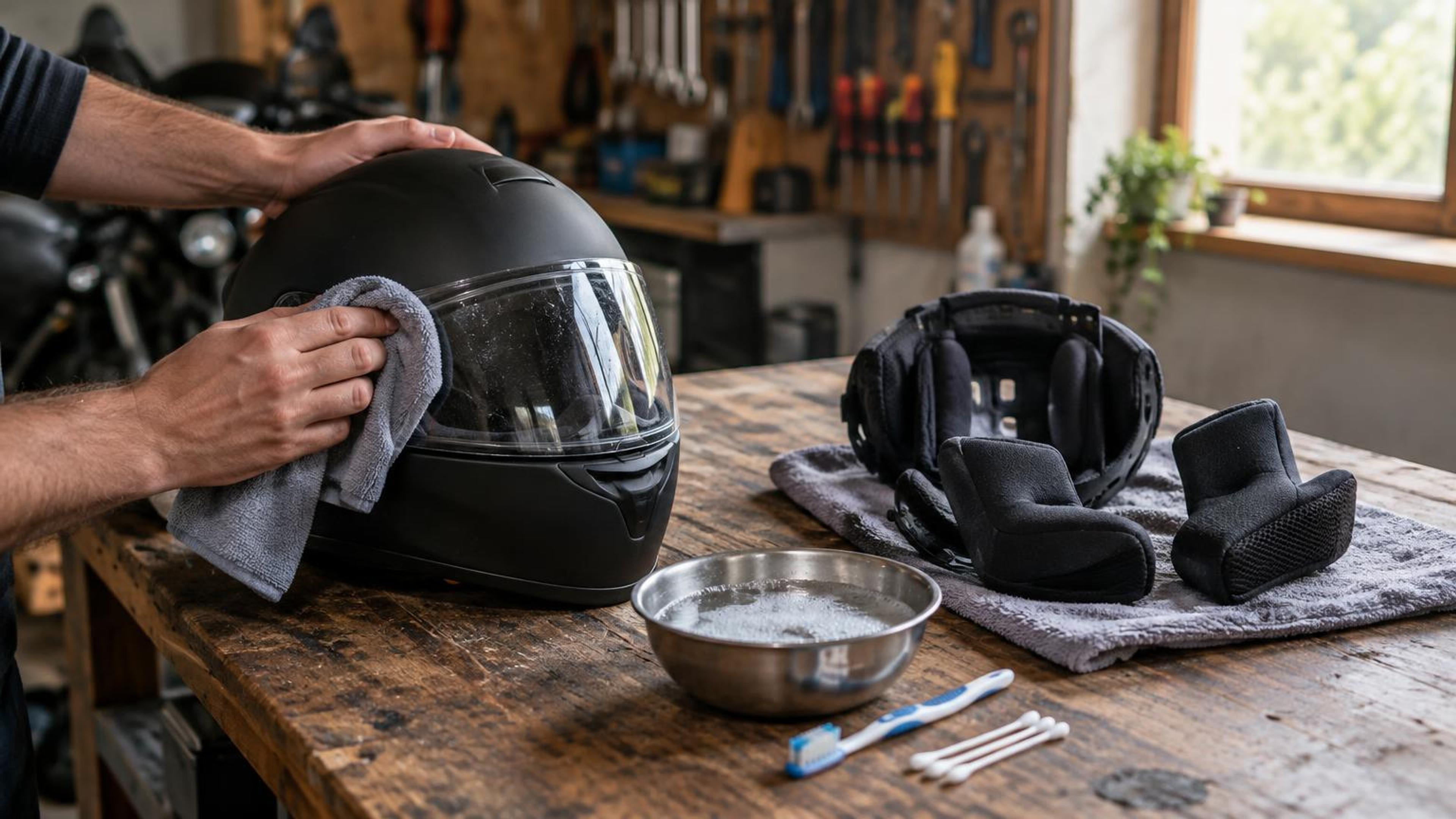
What you need
- A mild shampoo or soap. Baby shampoo works well.
- A bowl of lukewarm water.
- Two clean microfibre cloths, one to wash and one to dry.
- A soft toothbrush and a few cotton buds for the vents.
- A towel to lay the liner on while it dries.
Before you start, check the manual from your helmet's maker. It tells you which parts come out, how the visor releases, and anything the maker wants you to avoid.
Take it apart first
Take out what is meant to come out: the visor, the cheek pads and the liner. If you have a communication unit or speakers inside, unclip them so they stay dry. Each part is quicker to clean on its own, and nothing gets trapped in the padding.
The liner and cheek pads
This is the part that needs it most.
- Fill the bowl with lukewarm water and add a little shampoo.
- Press the liner and pads into the water and squeeze them gently a few times. Do not scrub or twist them.
- Rinse them in clean water until no more foam comes out.
- Press the water out with your hands, then roll them in a towel. Do not wring them.
- Leave them to dry in the shade, somewhere the air moves.
If your liner does not come out, wipe it with a cloth dipped in the same soapy water, blot it with a dry cloth, and leave the helmet open to dry.
The shell
Soak a cloth in warm soapy water and lay it over the shell for a minute. Bugs and grime soften, and they wipe off without scrubbing. Clean the vents with the soft toothbrush and cotton buds, then dry the whole shell with your second cloth.
On a matte helmet, skip polish and wax. They leave shiny patches that do not come off.
The visor
Wash the visor in lukewarm soapy water with your fingers or a microfibre cloth, rinse it, and let it air dry or dab it with a clean cloth. Paper towels and tissues feel soft but leave fine scratches, and those scratches catch every headlight at night.
If your visor has an anti-fog insert, take it out and clean it gently on its own, the same way.
What never goes near your helmet
Some things damage a helmet in ways you cannot see from the outside.
- Petrol, thinner, acetone or any other solvent. They can weaken the shell and the protective foam inside it.
- Glass cleaners and strong household cleaners. They can strip the coating off a visor.
- Heat. No hair dryer, no heater, and no drying in direct sun. The protective foam does not like it.
- A washing machine or dishwasher. Only put the liner in a machine if your helmet's maker says it can go in one.
How often
- The visor: a quick wipe after any ride that leaves dust or bugs on it.
- The liner and pads: every two to four weeks, and more often in summer and the monsoon.
- The shell and vents: whenever you wash the liner, or after a dusty ride.
Drying is half the job
A clean liner put back damp starts to smell again within days. Let every part dry completely before you put the helmet back together, then keep it somewhere air can reach the inside.
That is where storage comes in. A helmet left face down on a shelf or on the floor stays closed, so the padding never gets the air it needs. A mount that sits inside the helmet keeps it open between rides, which is why we built the SKELMET mount that way. There is more on what storage does to a helmet in Where does your helmet go after the ride?
A clean liner is the cheapest upgrade your helmet will ever get.